Opt for the total sale of photovoltaic electricity
The total sale of photovoltaic electricity involves installing photovoltaic panels on the roof of your building or home and selling all of your solar energy production to a state-approved operator at a regulated purchase price. This solution offers businesses and local authorities a fixed, stable, and secure additional income thanks to a 20-year guaranteed purchase contract.
The total sale of photovoltaic electricity involves installing photovoltaic panels on the roof of your building or home and selling all of your solar energy production to a state-approved operator at a regulated purchase price. This solution offers businesses and local authorities a fixed, stable, and secure additional income thanks to a 20-year guaranteed purchase contract.
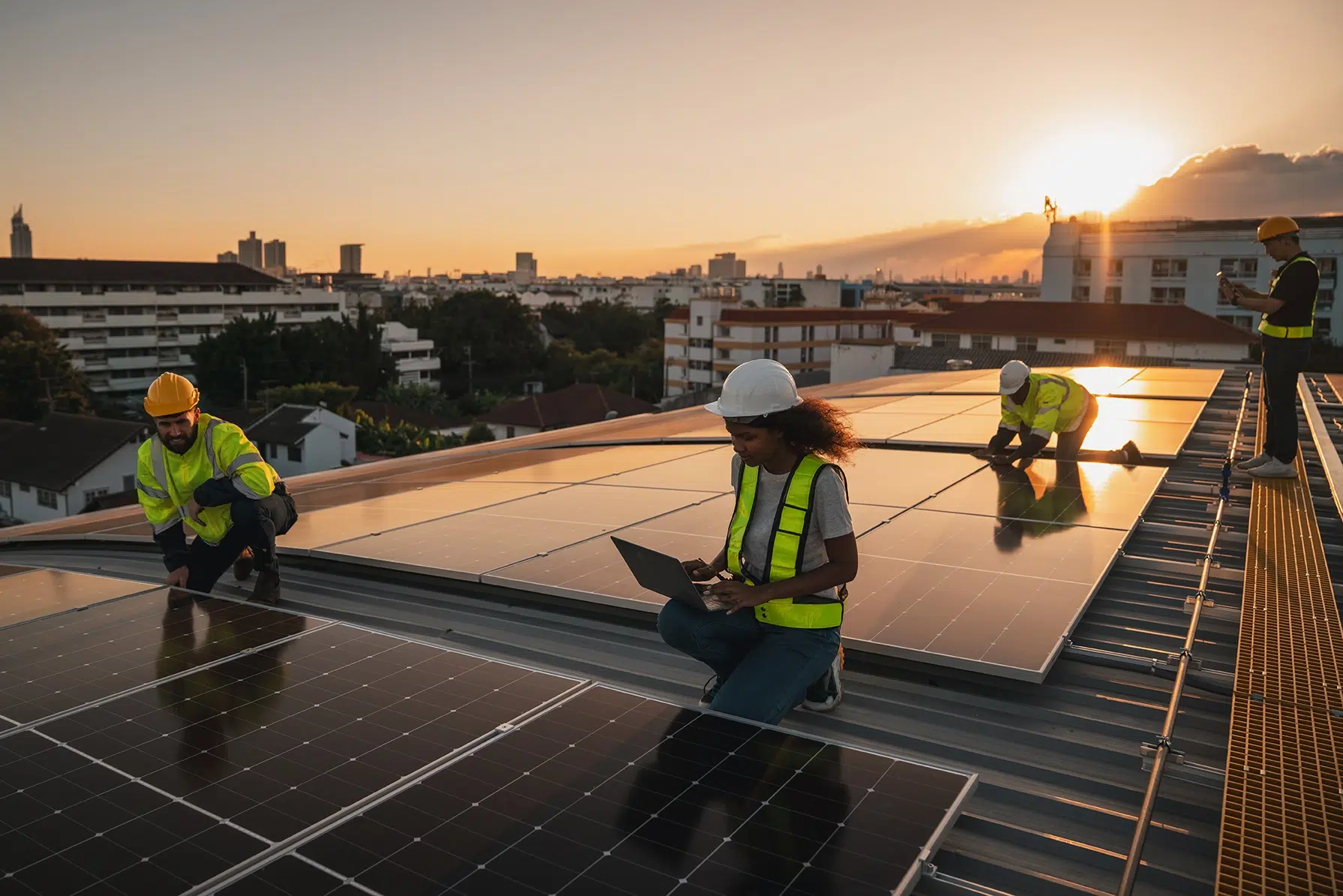
Installing solar panels allows you to generate additional income by selling electricity back to the grid under the feed-in tariff scheme. This government-regulated mechanism guarantees you a fixed price for the electricity you feed into the grid for a defined period of time.
Installation power | Purchase price per kWh in total sales |
≤ 3 kWp | 0€ |
≤ 9 kWp | 0€ |
≤ 36 kWp | €10.49 |
≤ 100 kWp | €9.12 |
*Photovoltaic feed-in tariff scale for Q4 2025 – valid until January 1, 2026
Above 100 kWp, the feed-in tariff for the electricity produced is determined following a tender process that AR SERVICES can manage on your behalf.
These high-power installations mainly concern professional structures (companies, farms, local authorities, etc.).
The advantages of total sale
Additional annual income
Sell all the electricity generated by your installations and enjoy a stable and sustainable source of income.
A fixed rate for 20 years
By choosing to sell all of your electricity production, you benefit from a purchase price set by the CRE (Commission de Régulation de l’Énergie) and guaranteed for 20 years.
Enhancing the value of your assets
Installing solar panels increases the value of your buildings or home. Whether you are selling, renting, or transferring ownership, you are promoting a modern, energy-efficient, and forward-thinking property.
A commitment to energy transition
By producing green electricity, you are affirming your CSR values and actively participating in the development of local renewable energies.

The different photovoltaic installations
Photovoltaic roofs
- Schools, administrative buildings, cultural facilities
- Public roofs offer ideal potential for installing photovoltaic panels. By making use of these already available surfaces, the community produces its own green energy while sustainably reducing its energy bill.
Photovoltaic shade structures
- Public parking lots, parking areas, or waiting areas
- These facilities protect vehicles, optimize often unused space, and can incorporate charging stations for electric vehicles.
Ground-mounted solar power plants
- Communal or undeveloped land
- By transforming these unused spaces into energy production areas, the community is taking action for the energy transition while generating new sustainable income for the municipality.
Discover our other production solutions
Everything you need to know about selling all your energy production
What happens at the end of my purchase obligation contract?
Once your purchase obligation contract has expired, it cannot be renewed.
However, you have several options available to you: you can continue to produce your own electricity by switching to self-consumption, or you can sell your energy to another buyer on the market.
To make the right choice and receive assistance with the process, you can turn to specialized organizations such as the Groupement des Particuliers Producteurs d’Électricité Photovoltaïque (GPPEP), which offers advice and support to independent producers.
Can I terminate my purchase obligation contract?
You can terminate a purchase obligation contract by sending your supplier a registered letter giving the notice period specified in the contract. In this case, compensation may be payable, according to the terms and conditions set out in your initial contract.
However, no compensation is due in the event of the sale of a home equipped with photovoltaic panels. The contract can simply be transferred to the new owners, who can then choose whether or not to continue it.
In addition, if you modify your installation, for example by changing the number of panels, it is possible to terminate the current contract in order to establish a new one adapted to the new configuration.
How does the total electricity sales contract work?
Under the purchase obligation, the producer signs a 20-year contract with EDF OA or an approved supplier. All of the electricity produced is transferred to the public grid and purchased at a fixed rate, determined at the time the contract is signed.
The income generated by this sale is then paid monthly or quarterly, according to the terms and conditions set out in the contract.
This system provides a stable additional income throughout the duration of the commitment.
Who should you sell your photovoltaic electricity to?
There are two main options available to you for selling your photovoltaic electricity production:
The obligated buyer:
You can sell your production to EDF OA (Obligation d'Achat), to a Local Distribution Company (ELD) or to any other approved organization.
The energy supplier:
You can also choose to sell your electricity to an energy supplier on the open market. The purchase price is then freely negotiated, and the contract term is more flexible. This solution may seem more advantageous in the short term, but it is more restrictive. You will need to monitor your production, invoice the supplier, and sometimes install a specific meter and a suitable monitoring system.