Finance the installation of your solar panels
Generating your own energy using photovoltaic panels reduces your costs while contributing to the energy transition. Whether you are a farmer or an industrial business owner, investing in photovoltaics can be both profitable and strategic. Leasing allows you to finance your installation while preserving your equity.
Financing through a lease
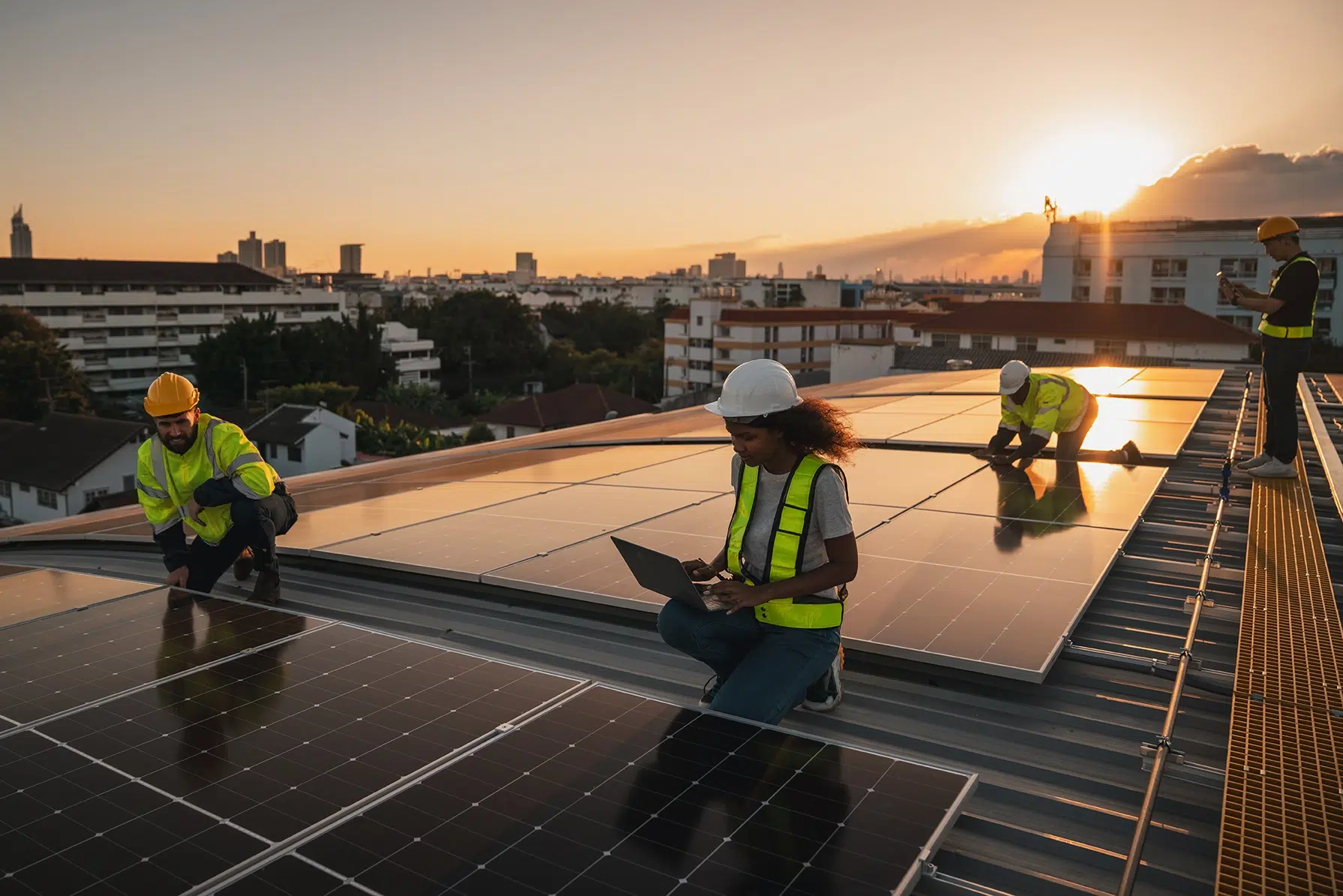
Photovoltaic leasing is a financing solution in which a bank or specialized organization covers the investment required for your solar installation. The financing company purchases the photovoltaic power plant and then leases it to you for a defined period.
This formula has several advantages:
- You preserve your company's cash flow.
- You spread out your payments with a monthly rent spread over 10 to 15 years.
- You immediately enjoy the benefits of solar power generation without any initial investment.
Before the contract is finalized, a credit check is performed to verify your ability to pay the rent.
- Lease payments for movable property are fully deductible from taxable income.
- Leasing financing allows you to cover the entire project without advancing any costs or VAT, while preserving the company's borrowing capacity.
- Full financing of up to 100% of the installation, covering photovoltaic modules, inverters, electrical infrastructure, grid connection, and implementation costs.
Store the electricity from your solar installation in a lithium-ion battery and use it when you need it. Less dependence on the grid, more autonomy, and real savings. Storing your surplus energy thus becomes a real lever for energy and economic performance. It allows you to use your energy 24 hours a day.
Aid to reduce installation costs
Photovoltaic purchase obligation
This scheme allows solar energy producers to sell their electricity to EDF at a fixed rate guaranteed for 20 years. Revenue comes from the sale of the electricity produced (either sold in its entirety oras surplus).
Self-consumption bonus
This subsidy is intended for those who wish to consume their own energy while selling their surplus electricity. The amount depends on the power of the installation and can be paid from the first year. It applies to installations of less than 100 kWp and 500m².
Local assistance
Some local authorities offer subsidies or tax breaks to encourage the installation of solar panels. We recommend that you check with your local city hall for more information.
A financing solution tailored to all sectors
Why rent your equipment?
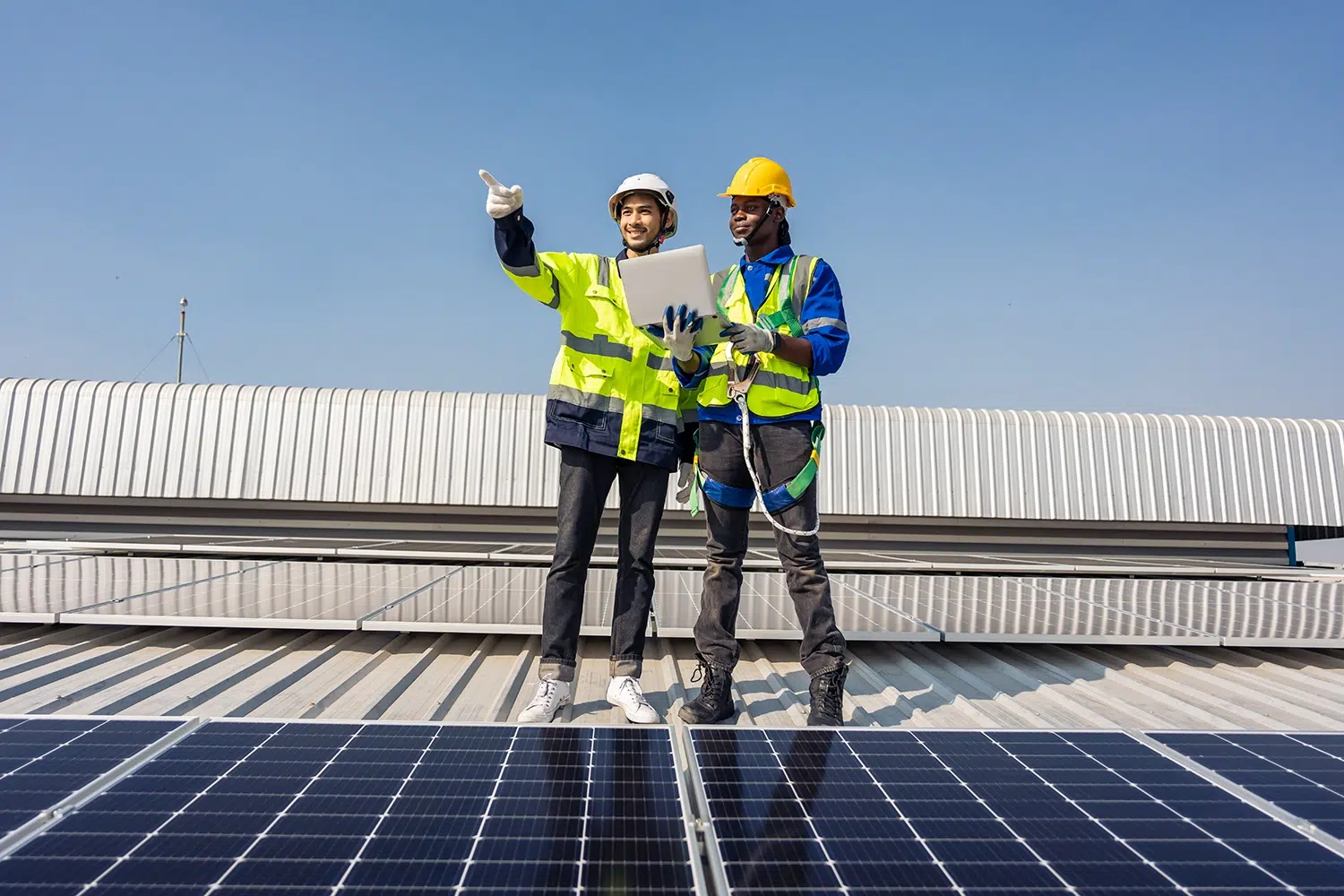
This financing model allows you to avoid a large initial investment. You do not have to use your credit lines and you can keep your cash flow for developing your business. Lease payments are considered operating expenses, which makes financial management easier.
As soon as the system is up and running, your energy costs will start to fall. The entire project is handled by the bank or specialist organization: installation, monitoring, and maintenance. This means you can enjoy the benefits of solar energy without any technical hassles.
From a regulatory standpoint, self-consumption immediately reduces the amount of electricity you need to report. This helps you more easily achieve the 40% energy consumption reduction target set by the tertiary decree by 2030.
Finally, your assets are enhanced. You improve your carbon footprint, strengthen your CSR actions, and present a more committed and attractive image to your company and partners .
Discover our production solutions
Total sales
Sell all of your electricity production to EDF at the regulated purchase price and enjoy a stable and sustainable additional income.
Self-consumption with sale of surplus
Use the energy you generate directly on your site and sell any surplus electricity to EDF at the current feed-in tariff.
Self-consumption with storage
Consume your own electricity and store the surplus in a battery to use when you need it.
Everything you need to know about financing solar panels
Are there any scams to avoid when financing solar panels?
The solar market has grown significantly and, unfortunately, has seen the emergence of numerous scams. Among the most common are offers that are too tempting to be true, such as "free" or "€1" installations, which actually conceal high-interest loans.
In addition, some companies are not RGE-certified or promise a return on investment in two or three years, when in reality it takes between eight and 12 years on average.
It is also important to check that the company selling the equipment is the same one that installs it. Some companies subcontract all the work to less rigorous service providers, which can complicate warranties and after-sales service.
How do I choose the most suitable financing for my project?
The most suitable financing for your project depends on your situation (individual or business), your budget, and the objectives of your photovoltaic installation. To make the right choice, it is essential to evaluate several key points.
1. Define your investment capacity
Whether you are a household or a business, there are two possible approaches:
- Cash financing to reduce overall costs and maximize long-term profitability.
- Financing via a loan, to preserve your cash flow while immediately enjoying the benefits of solar energy.
2. Identify the programs available for your profile
- Individuals: eco-PTZ (depending on eligibility), self-consumption bonus, reduced VAT, local subsidies, etc.
- Professionals: depreciation allowances, regional aid, leasing, third-party investors, etc.
3. Choose based on your consumption pattern
The operating mode of your installation directly influences financing: self-consumption (partial or total), resale of surplus, total resale, etc. Some models generate regular income (feed-in tariff) and others reduce your bills.
4. Assess the profitability of the project
Good financing is financing that strikes a balance between:
- reasonable monthly payments
- savings and/or income covering part or all of the repayment
- predictable profitability over several years
A personalized study is essential to tailor financing to your consumption, energy needs, and goals (lower bills, energy independence, building value, etc.).
5. Check what the financing covers
To ensure a clear picture of the actual cost, make sure that the financing includes:
- equipment (panels, inverter, structures)
- the installation
- the connection
- commissioning
- administrative procedures
- monitoring and maintenance
Can multiple forms of financial assistance be combined?
It is entirely possible to combine subsidies to finance a photovoltaic installation, but the rules are not the same for individuals and professionals.
For individuals:
You can combine certain types of assistance, including:
- Self-consumption bonus
- Local aid (region, department, municipality)
- Reduced VAT (depending on the type of installation)
- Zero-interest eco-loan (eligibility depending on the nature of the project)
For professionals:
The principle also exists, but the mechanisms are different.
- Regional or territorial aid (sustainable development, energy transition, productive investment)
- Sector-specific subsidies (industry, agriculture, craftsmen, etc.)
- Electricity resale contracts (regulated rates via EDF OA or free market)
Certain public subsidies cannot be combined (depending on the rules specific to each region or funding body).
Want to learn more about leasing?
You can contact us via our form or by phone:
Phone
AR Services
360 Thury Harcourt Road
14111 Louvigny