Photovoltaic panels for local authorities
What if your public buildings became energy producers? Thanks to photovoltaic panels, your municipalities, counties, and regions can generate green electricity, reduce their energy bills, and actively participate in the energy transition.
What if your public buildings became energy producers? Thanks to photovoltaic panels, your municipalities, counties, and regions can generategreen electricity, reduce their energy bills, and actively participate in the energy transition.
APER law: obligation or opportunity?
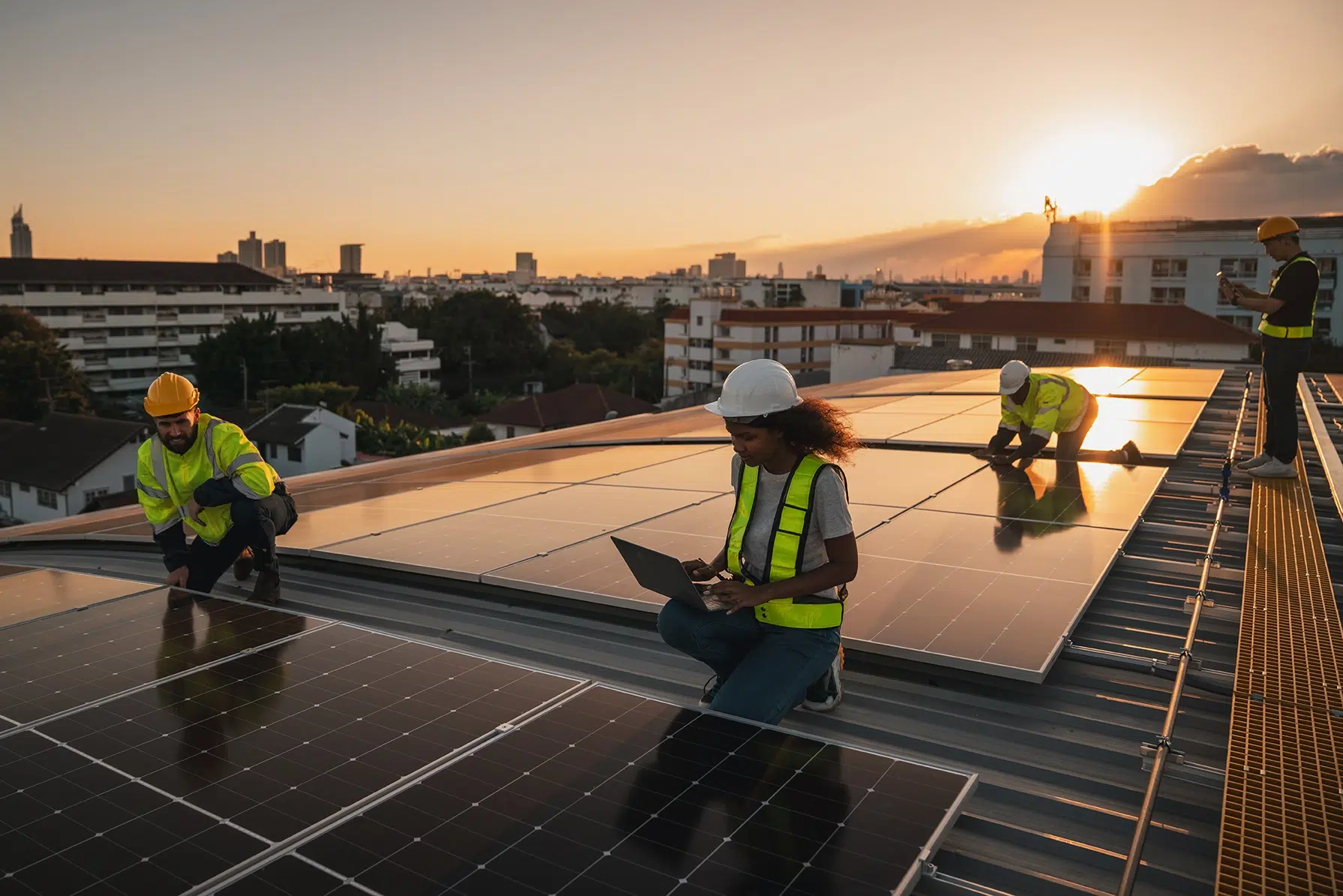
Article 40 of the APER law now requires owners and operators of outdoor parking lots larger than 10,000 m² to cover at least 50% of their surface area with photovoltaic panels by 2026 and more than 1,500 m² by 2028.
These spaces will need to be equipped with photovoltaic shade structures, self-supporting wooden or metal structures topped with photovoltaic panels that generate green energy and protect parked vehicles.
At AR SERVICES, we support local authorities every step of the way to transform this regulatory constraint into a real energy and economic opportunity.
The stages of your energy transition
Customized study
One of our experts will visit your farm to understand your needs. We will carry out a technical and feasibility study of your project, calculate the projected photovoltaic yield, and offer you the solution best suited to your needs.
Administrative procedures
We take care of all the administrative procedures to ensure the project runs smoothly and to make the process as seamless as possible for you.
Installation and commissioning
We will visit your farm to install your solar panels.
Servicing and maintenance
AR SERVICES is responsible for the upkeep, maintenance, and repair of the facilities.
What are the advantages of photovoltaics for local authorities?
Reduce public spending
Reducing the carbon footprint
Enhancing the value of real estate assets
Boosting local employment
Choose the solution that best suits your needs
Total sales
Sell all of your electricity production to EDF at the regulated purchase price and enjoy a stable and sustainable additional income.
Self-consumption with sale of surplus
Use the energy you generate directly on your site and sell any surplus electricity to EDF at the current feed-in tariff.
Self-consumption with storage
Consume your own electricity and store the surplus in a battery to use when you need it.
Choosing the most suitable photovoltaic system for your community
Photovoltaic roofs
- Schools, administrative buildings, cultural facilities
- Public roofs offer ideal potential for installing photovoltaic panels. By making use of these already available surfaces, the community produces its own green energy while sustainably reducing its energy bill.
Photovoltaic shade structures
- Public parking lots, parking areas, or waiting areas
- These facilities protect vehicles, optimize often unused space, and can incorporate charging stations for electric vehicles.
Ground-mounted solar power plants
- Communal or undeveloped land
- By transforming these unused spaces into energy production areas, the community is taking action for the energy transition while generating new sustainable income for the municipality.

Everything you need to know about photovoltaics in local authorities
Is photovoltaics profitable for local authorities?
For this type of investment, profitability is excellent, with returns on investment between 8 and 10 years depending on the community's energy purchase price. Energy savings, specific government subsidies, and income from electricity sales guarantee stable and predictable profitability. Public photovoltaic projects are therefore easily financeable.
How do I know if my community is eligible for a solar project?
To find out if your community is eligible for a solar project, a feasibility study can assess the solar potential, the configuration of roofs or land, and the possibilities for connecting to the electrical grid.
What installation capacity should be planned for a public building?
It depends on the available surface area, energy requirements, and the type of project (roof, shade structure, or ground-mounted system). An energy assessment allows for precise sizing of the installation. For an initial estimate, our online simulator gives you a clear picture of your building's solar potential and the size of installation best suited to your needs.
Can a solar project be shared between several municipalities?
Intermunicipal projects allow costs and benefits to be shared, while facilitating the financing and management of facilities.
What happens to a photovoltaic installation at the end of its life?
The panels are over 90% recyclable. They are collected and processed by specialized, certified companies in France, such as PV Cycle.