Consume and store your solar energy on battery power
Store electricity from your solar installation in a lithium-ion battery and use it when you need it. Less dependence on the grid, more autonomy, and real savings. Storing your surplus energy thus becomes a real lever for energy and economic performance. It allows you to use your energy 24 hours a day.
Store the electricity from your solar installation in a lithium-ion battery and use it when you need it. Less dependence on the grid, more autonomy, and real savings. Storing your surplus energy thus becomes a real lever for energy and economic performance. It allows you to use your energy 24 hours a day.
Your energy storage project
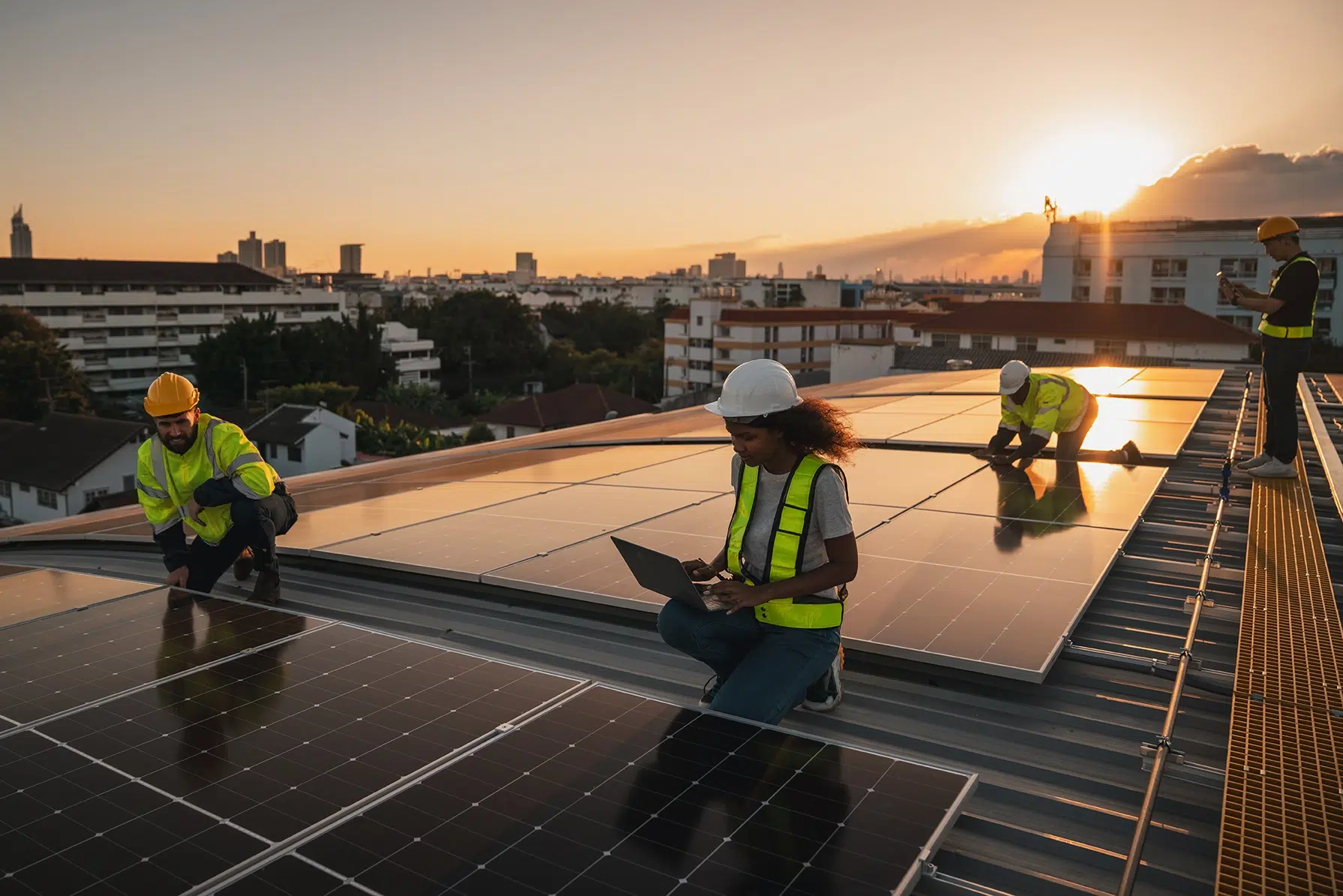
Our team will assist you in choosing your batteries, helping you determine the storage capacity best suited to your needs and budget. This support also includes secure installation by our QualiPV-certified technicians, who will take care of setting up the photovoltaic panels and batteries.
As an option, we offer a maintenance and repair service to anticipate potential problems and ensure that your system remains reliable and operational, without any interruptions that could disrupt your business or daily life.
The self-consumption bonus
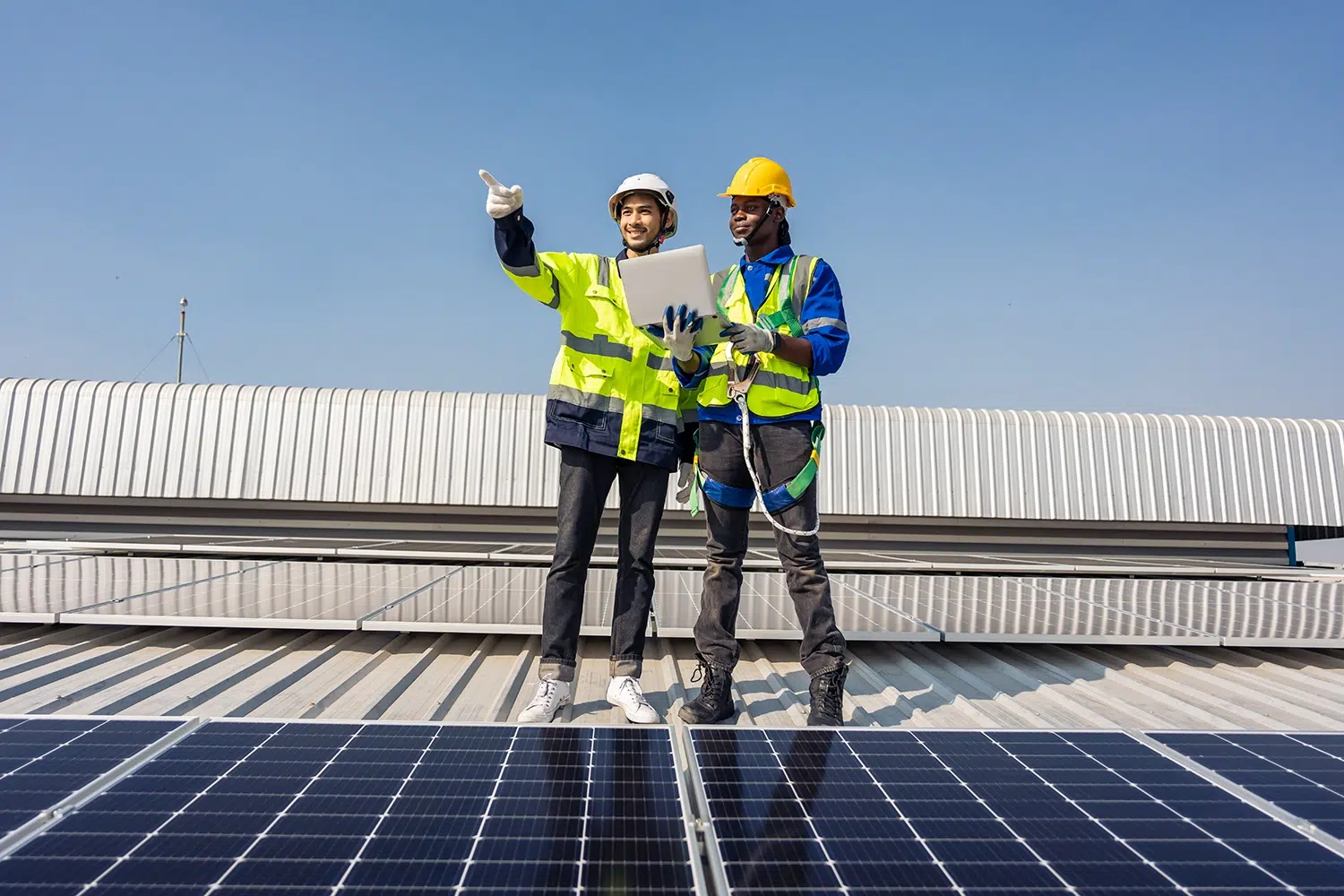
The photovoltaic self-consumption bonus is an investment subsidy offered by the government to individuals and professionals to reduce the cost of installing photovoltaic panels. It is reserved solely for self-consumption with the resale of surplus energy. This subsidy rewards businesses and individuals who produce their own green electricity by paying an amount per kilowatt-peak (kWp).
To benefit from this, you must have a contract with EDF OA or another mandatory buyer to purchase your surplus production.
The premium amounts according to the power of the installation:
≤ 9 kWp
$80/kWp
≤ 36 kWp
€160/kWp
≤ 100 kWp
$80/kWp
Previously paid over five years, the subsidy is now awarded in a single installment in order to immediately reduce the costs of purchasing and installing photovoltaic panels.
The benefits of self-consumption with storage
Safety in case of power failure
In the event of a power failure or outage, your storage system takes over. This provides you with a continuous, 100% green power supply, ensuring the stability and security of your business.
Control of your budget
Energy storage allows you to reduce your consumption during peak hours and protect yourself from unpredictable increases in electricity prices. Between 2021 and 2024, the average cost of electricity for businesses increased by 47% according to INSEE. By storing your own energy, you stabilize your expenses and save money on your bills.
Optimizing your self-consumption
The battery stores excess solar energy generated during periods of low consumption, so it can be fed back into the grid during peak activity. The result: greater energy independence and optimal use of your production.
photovoltaic purchase tariffs
Installing solar panels allows you to generate additional income by selling surplus energy back to the grid under the feed-in tariff scheme. This government-regulated mechanism guarantees you a fixed price for the electricity you feed into the grid for a defined period of time.
| Installation power | Purchase price per kWh in total sales |
| 0–9 kWp | $4.00 |
| > 9–100 kWp | $6.17 |
*Photovoltaic feed-in tariff scale for Q4 2025 – valid until January 1, 2026
Above 100 kWp, the feed-in tariff for the electricity produced is determined following a tender process that AR SERVICES can manage on your behalf.
These high-power installations mainly concern professional structures (companies, farms, local authorities, etc.).
The different photovoltaic installations
Photovoltaic roofs
- Schools, administrative buildings, cultural facilities
- Public roofs offer ideal potential for installing photovoltaic panels. By making use of these already available surfaces, the community produces its own green energy while sustainably reducing its energy bill.
Photovoltaic shade structures
- Public parking lots, parking areas, or waiting areas
- These facilities protect vehicles, optimize often unused space, and can incorporate charging stations for electric vehicles.
Discover our other production solutions
Total sales
Sell all of your electricity production to EDF at the regulated purchase price and enjoy a stable and sustainable additional income.
Self-consumption with sale of surplus
Use the energy you generate directly on your site and sell any surplus electricity to EDF at the current feed-in tariff.
Everything you need to know about self-consumption with storage
What storage capacity should you choose?
The ideal capacity depends on your consumption profile, your needs, and your autonomy goals. To find the best compromise, our teams can advise you by phone or via our contact form to determine the most suitable solution.
What is the lifespan of the batteries?
Lithium-ion batteries offer a lifespan of 10 to 15 years, with 6,000 to 10,000 cycles, which corresponds to daily use over many years. The manufacturer's warranty generally covers 10 years, with a minimum residual capacity of 70 to 80%.
What subsidies and assistance are available for this solution?
To finance this solution, several measures have been put in place by the government:
Type of assistance | Features | Terms and conditions |
Self-consumption bonus |
|
|
Purchase obligation |
|
|
Third-party investment |
|
|
Certain regional subsidies are available. We advise you to contact your local town hall for information on the conditions that apply.
What happens in the event of a power outage?
If your installation has a backup function, your batteries can power your essential appliances (lighting, refrigerator, Internet box, etc.) during a power outage. This is a reliable solution to avoid inconvenience and ensure the continuity of your business or daily life.
What maintenance does a storage system require?
The photovoltaic system with storage requires very little maintenance. The panels need to be cleaned occasionally to remove dust and pollution, and the batteries are automated and monitored by a management system (BMS) that optimizes their lifespan (over 10 years).